Type: News · Author: Hard Signal Newsroom · Dates of events: January 19, 2024 (principal's letter), November 10, 2026 (Sixth Circuit ruling)
The ruling
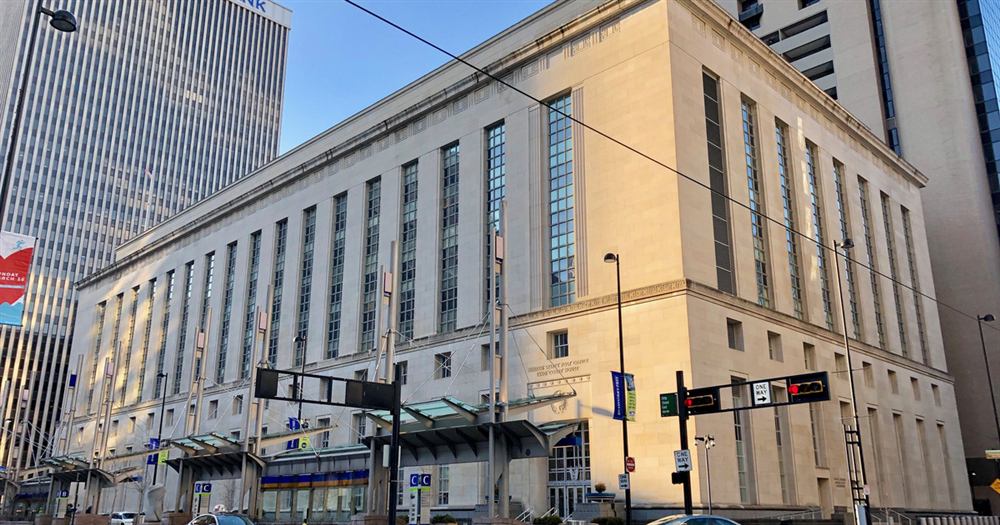
On November 10, 2026, a divided Sixth Circuit panel (2-1) held that Stefanie Boone had plausibly alleged a First Amendment violation and reversed the dismissal of that claim against Lowell Area Schools in Michigan, sending the case back to the district court. The opinion is published, making it binding precedent in the circuit.
What she alleges
Boone, a certified teacher and mother of three children in the district, moderates a parents' Facebook page. According to her complaint, since 2021 she had been criticising what she describes as the district's promotion of DEI, social-emotional learning and gender "ideologies," along with library books she considers "sexually explicit."
In early 2024 she posted a link to an article about a teacher, named in the ruling, and wrote: "Christ said, 'Whoever causes one of these little ones who believe in me to sin, it would be better for him to have a great millstone fastened around his neck and drowned in the depth of the sea.'" (Matthew 18:6). On January 19, 2024, the high school principal wrote to her that the post could "be construed as threatening in nature." He asked her to "immediately cease and desist from any reference to any Lowell Area Schools employee on social media and/or other public communication platforms," warning that failure to comply "may result in further action including but not limited to all available legal remedies."
The reasoning
The majority (Judges Davis and Mathis) found that such a letter can amount to a coercive prior restraint: a public official ordering a citizen to stop talking about public employees, backed by the threat of legal action. The court relied in part on the Supreme Court's 2024 decision in *NRA v. Vullo*, which bars officials from using coercion to suppress speech.
Judge Ritz dissented on this point, noting that the letter responded to a post aimed at a specific teacher, after what he describes as a years-long campaign, and that it could reasonably be read as a firm request rather than a threat.
The revived claim covers only that social-media directive. The court found no plausible claim against the letter's second directive, which barred Boone from contacting school staff without prior permission. Her Fourteenth Amendment and Title IX claims also remain dismissed.
What the ruling does not say
This is the pleading stage. The court did not find that the district violated the Constitution; it found that the facts as alleged, if proven, are enough for the claim to proceed. None of those facts has yet been established at trial.
We found no public response from the district to the ruling. At an April 8, 2024 board meeting, however, the principal denied silencing Boone: according to the ruling, he said his letter simply asked her to stop directly referencing staff because of posts staff perceived as "derogatory, disparaging, and disrespectful," in order to protect staff. Boone's lawyer, Matthew DePerno, posted a statement on the decision on X on November 14.
Barely a ripple
Beyond Bloomberg Law (November 11), local station WOOD-TV (report cited by Hoodline, not directly reviewed) and Hoodline (November 15), our searches found no coverage in the national press, for a published appellate ruling that clarifies how far a school can go with a critical parent.
Sources
- U.S. Court of Appeals for the Sixth Circuit, Boone v. Lowell Area Schools, No. 25-1948, opinion of Nov. 10, 2026
- Matthew DePerno (plaintiff's attorney), statement on X, Nov. 14, 2026
- Bloomberg Law, Nov. 11, 2026
- WOOD-TV (link cited by Hoodline; page not accessed directly, access denied to our tools)
- Hoodline, Nov. 15, 2026